ProZone open to public
Dear fellow cooperators,
we would like to proudly present to you our newest move, making ProZone the home of Finalizing and later stages of Public Server games.
Dear fellow cooperators,
we would like to proudly present to you our newest move, making ProZone the home of Finalizing and later stages of Public Server games.
Ladies and gentlemen, we would like to announce that our circle has grown once again by another crazed soul.
A person who has been here for quite some while, somebody who has always been a friend to us all and helping anybody who would need it. With his attitude to learning “Didn’t work this time, let’s do it next time better because this, this and that” , he managed to learn exceptionally quickly, not to mention that his constructions already managed to blow up a handful of brains. As learning how to build something is never the only weapon in the arsenal of a skilled builder, also experimenting and trying various new designs is bread and butter for him, especially shining in games which involve logic – but not only there!
With will to not only create new and better networks in the games, but also care about the documentation on our wiki or blog, we hope to make our world even bigger and more awesome! (along with hoping we aren’t going to turn into a complete nuthouse)
With great cheer, please welcome the new member of #openttdcoop, LoPo!
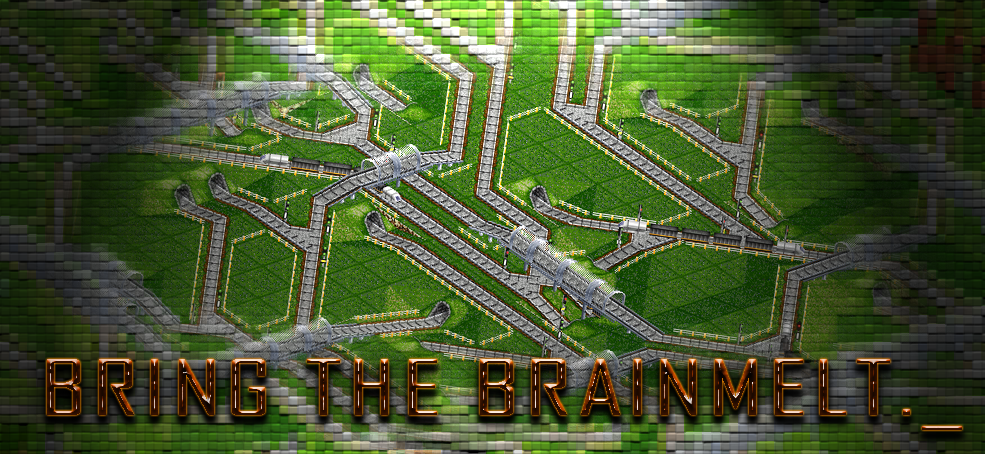
Let me introduce you to the third part of the Overflow series of ABR, in this article I aim to note the most interesting innovations to overflow construction which are not described in the previous articles. Also you will be able to read about some less overflow related things, but vital for general building. The article is not sorted chronologically, I am just going to describe a few concepts of designs, and sort them by complexity or just by how I think it is practical to build such an overflow.
The new most notable features I will present is the combo-signalled reverser and techniques of high throughput overflow stations.
I will of course not repeat many things, especially roles of each component in overflow stations. Therefore I strongly recommend to read ABR04: Overflows and ABR08: Overflows II before reading this one. I also did not mark the images with colours etc as much as I did previously, simply because recoznizing these should already be piece of cake if you want this article to be anyhow useful for you.
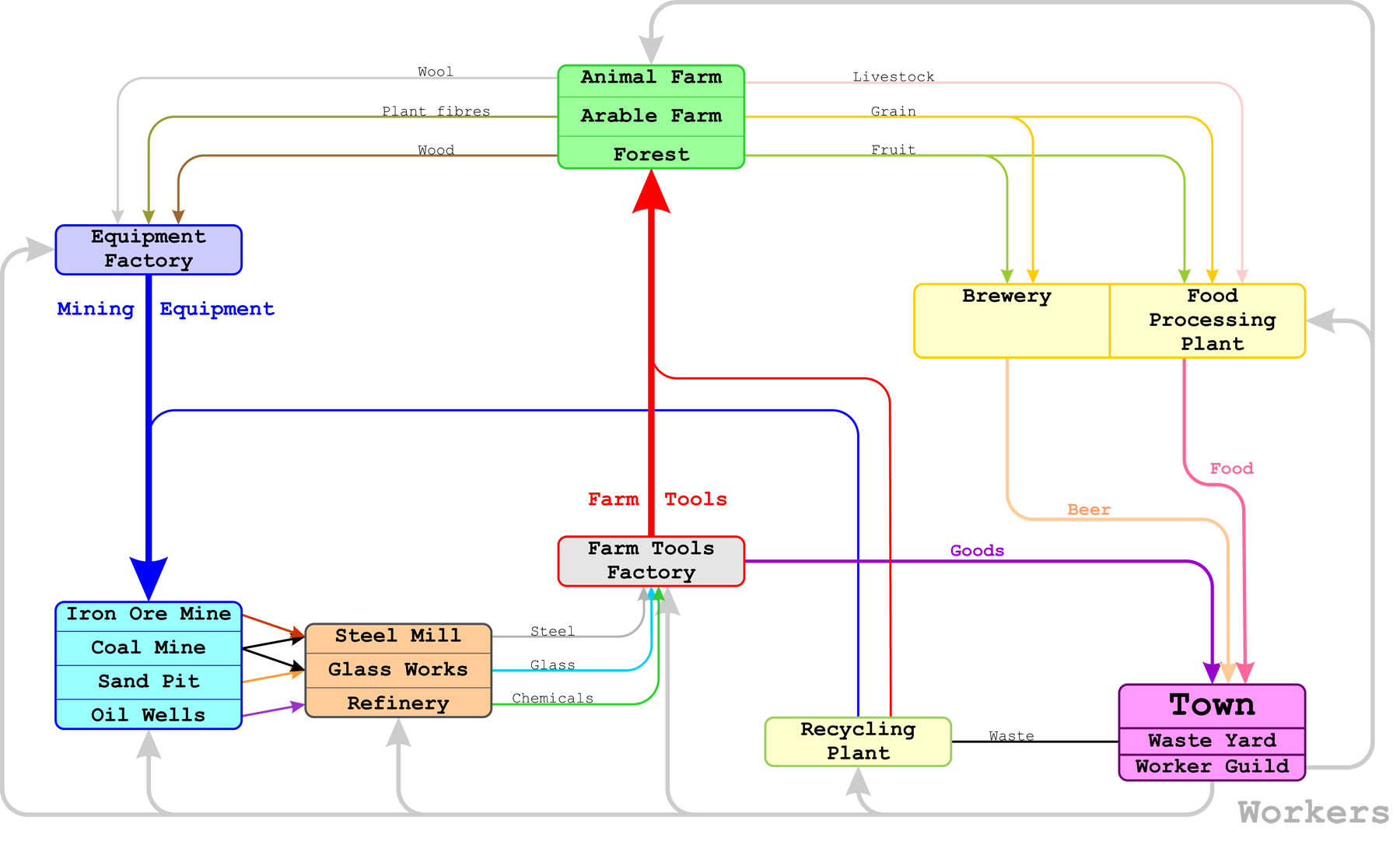
It has been a while since I have posted and early development article of NUTS and now is the time when I am starting another newGRF project – new industries. It all started as I was trying to find some ways how to improve FIRS, but the required changes would be way too major so it is better off to make a separate newGRF. In this article I am going to present to you the ideas that I have gotten so far, and how is the core of the set going to work and of course I am going to explain why.
P.S. if you have any nice ideas about the newGRF name, please do not hesitate to throw them at me 😉
© 2005 - 2026 #openttdcoop & Wiki | based on the the "dark" theme & Bartelme Design - contact us


comments marked as Spam